Transform Your Business With Expert Consulting Services
Identification of hazards, the evaluation and assessment of risk, and the determination of control measures is a fundamental component of Australian WHS Regulations.
Under all states and territories, operators of amusement plant must identify reasonably foreseeable hazards that could give rise to risks to health and safety, and must eliminate (or if not reasonably practicable to eliminate, must minimise) risks to health and safety so far as is reasonably practicable.
The foundation to successful risk control starts with correct identification of the hazards that could become risks.
Aidaptive has specially adapted the HAZID and HAZOP (Hazard Identification & Operation) process especially for amusement devices. This allows both a comprehensive and often overlooked identification of hazards for risk assessment.
General Public: Risk = Hazard + Outrage
VS
Professional: Risk = Probability x Magnitude x Controllability
Risk ≠ Hazard + Outrage
Risk = Probability x Magnitude x Controllability
Aidaptive’s risk managed tools include the
• HAZOP / HAZID
• Risk Assessment
• FMEA & FMECA
• PRN
• Fault Tree
• Bowtie Analysis
Risk Assessment
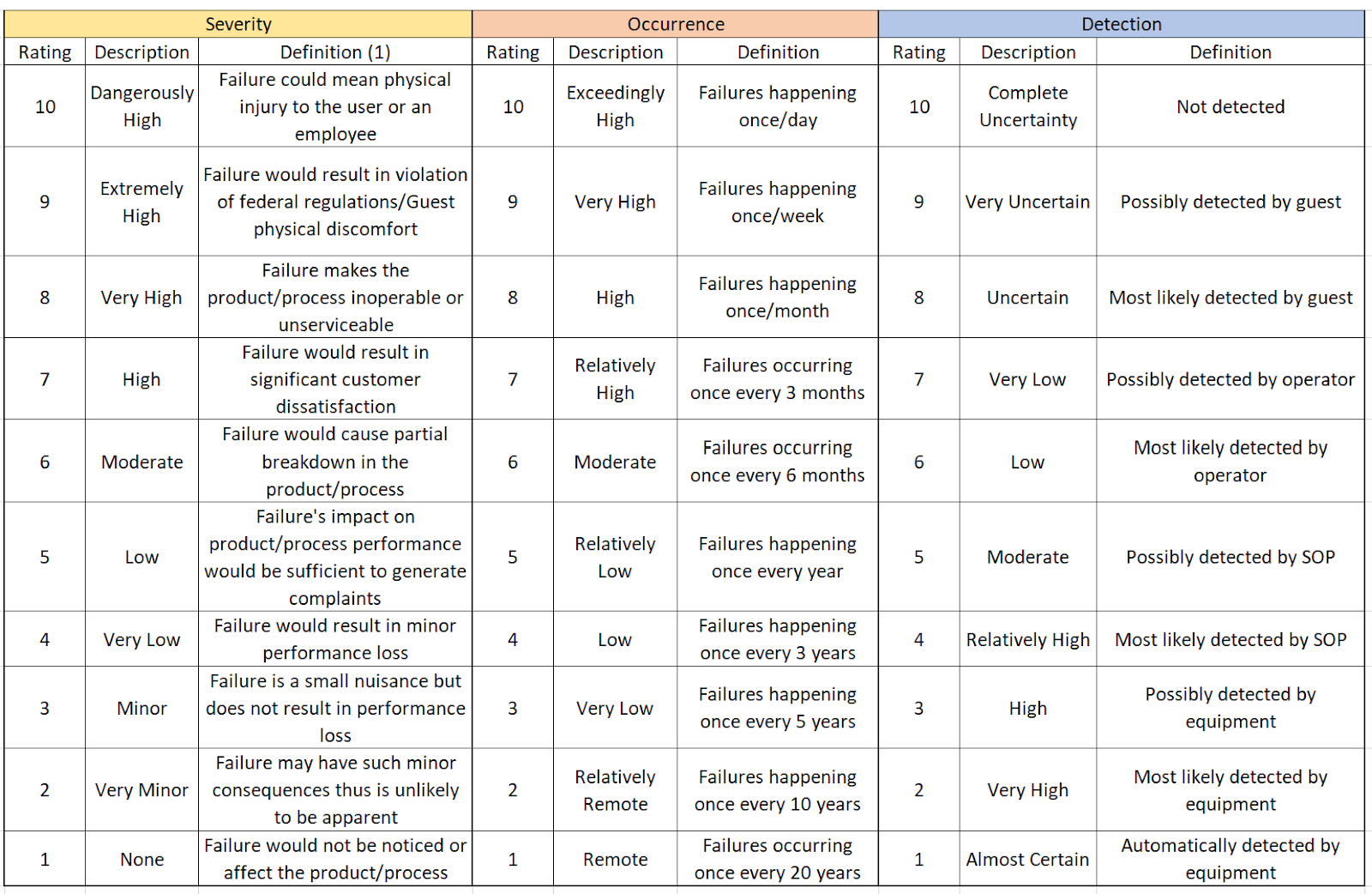
Traditional risk assessments separate in two dimensions: Likelihood and Consequence. Simple in application, they have one flaw – they all assume a consistent level of control.
Aidaptive applies a 3 dimensional risk matrix, including level of control. Developed by NASA, this method provides superior guidance as to when a re-design is required or alternatively, may validate that the existing control levels are sufficient for preventing the hazard occurrence.
Aidaptive’s Risk Analysis process identified hazards, determines the consequences, measures the risk, considers the controls put in place and re-evaluates the controlled process, to confirm if enough has been done.
HAZID & HAZOP
The HAZID & HAZOP (Hazards in Design & Hazards in Operation) process was developed within the chemical industry (ICI 1968) and has become a global foundation tool for hazard identification and desing guidance.
Aidaptive has specially adapted the HAZID and HAZOP process for amusement devices – leading the world in this process. Aidaptive’s methods allows for both a comprehensive and often overlooked identification of hazards for risk assessment.
FMEA & FMECA
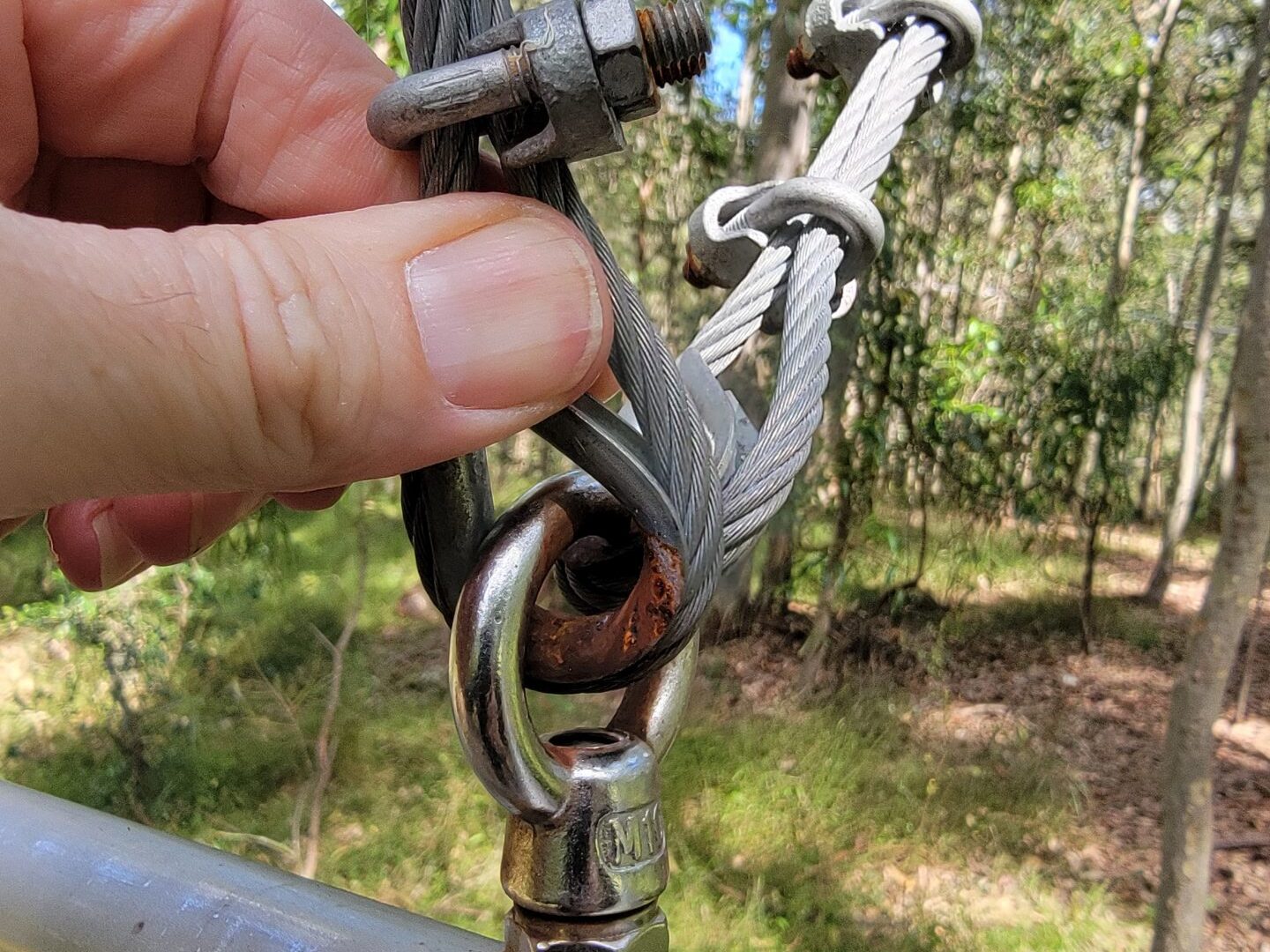
Failure Modes Effects Analysis – understanding how a system or component may fail is critical to prevention. The use of FMEA is a qualitative method of exploring “what-if” scenarios. It is a precursor to FMECA.
FMECA: Failure Modes Effects Criticality Analysis
With an understanding of how a component is likely to fail, the criticality of its failure is assessed. This answers the “so what” question, and allows ranking of the failure mode criticality and determination of the highest risk items, and not being distracted by non-serious failures.
Aidaptive uses both FMEA and FMECA
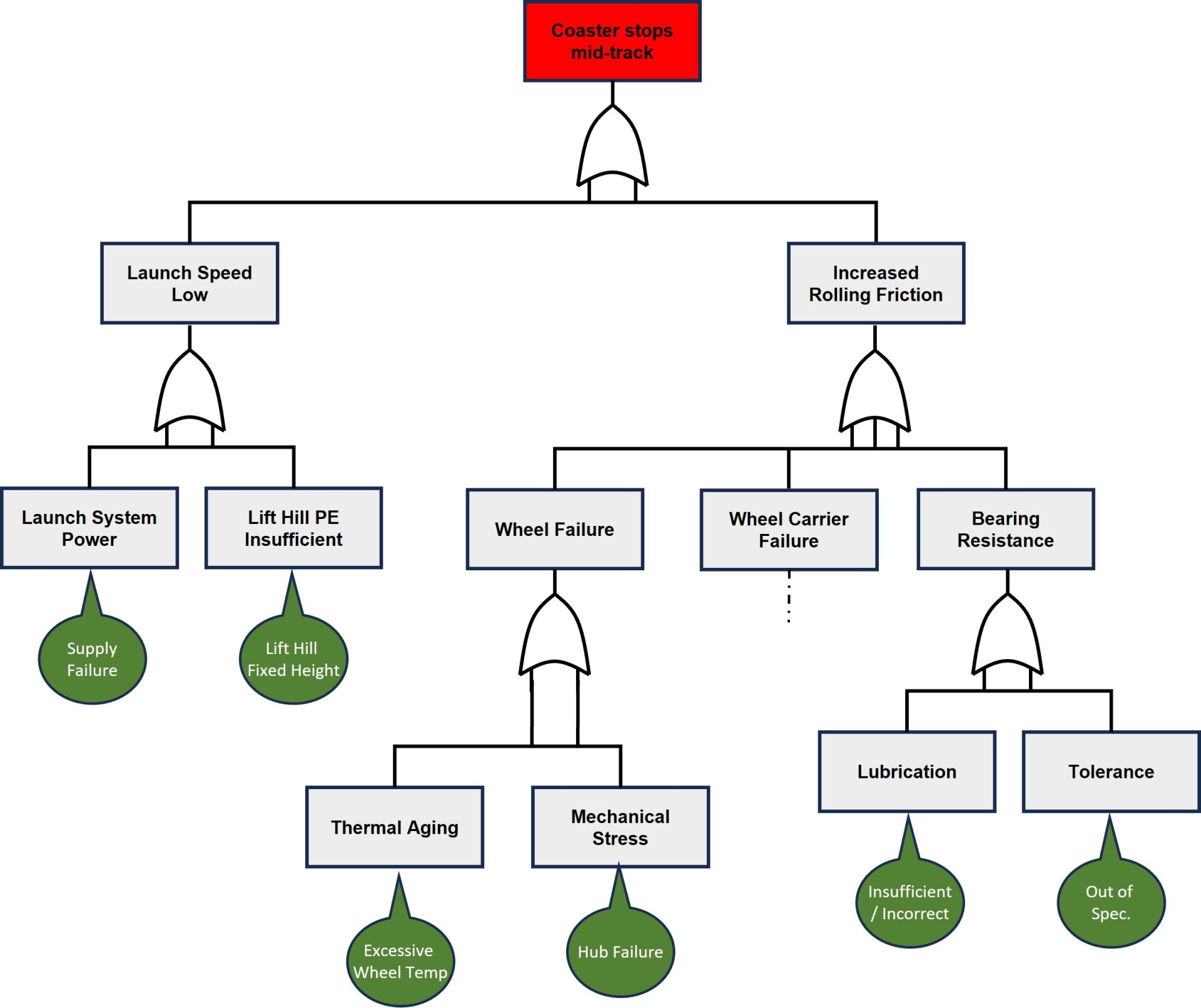
Fault Tree Analysis
Fault Tree Analysis: is a top-down approach to cause identification, wherein the starting point of analysis is the undesired event. Events leading to the undesired event are then evaluated based on their relationship with their immediate effect, which is either another event closer to the undesired event or the problem itself.
This method is useful in both prevention of failure and determination of cause of failure.