Inflatables; Land and Water
Height Above 3 metres
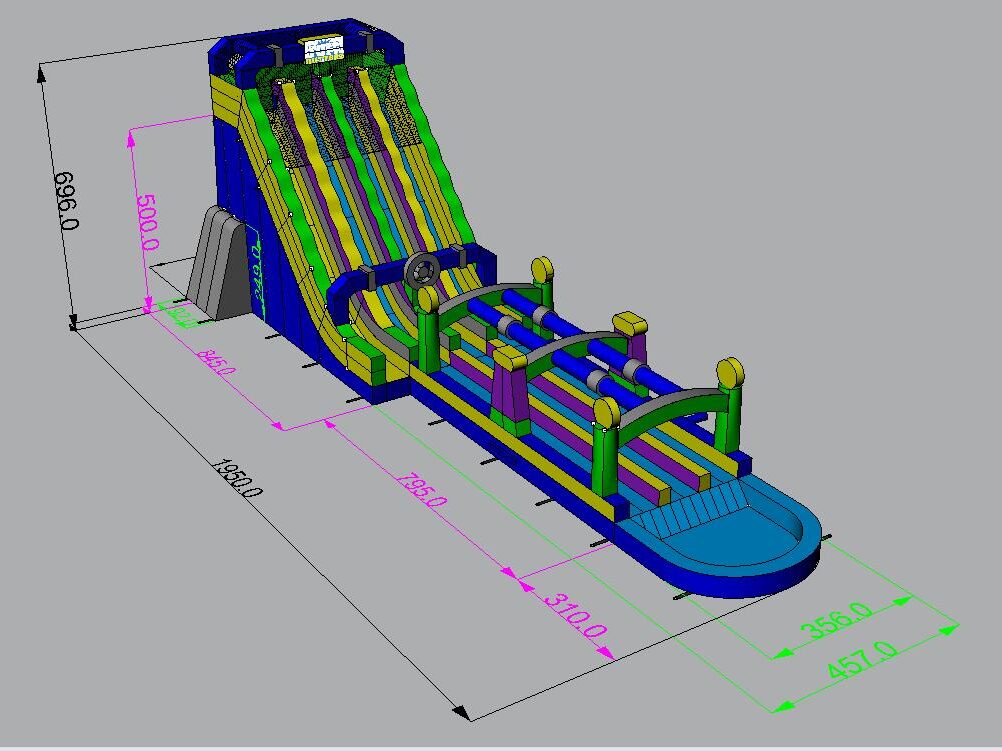
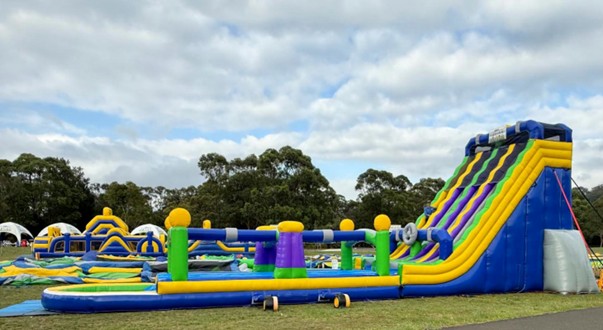
In Australia, any inflatable with a platform height of 3 metres or more is classified as “registrable plant” under Work Health and Safety (WHS) regulations. This means it must undergo a formal Design Review and Annual Inspections to legally operate.
Ensuring Your Large-Scale Inflatables Meet Australian Standard AS 3533.4.1
At Aidaptive, we specialise in navigating the complex regulatory landscape of the amusement industry. If your continuously blown inflatable device features a platform height of 3 metres or more, it is subject to stringent registration. Understanding these is the first step toward a safe and compliant operation.
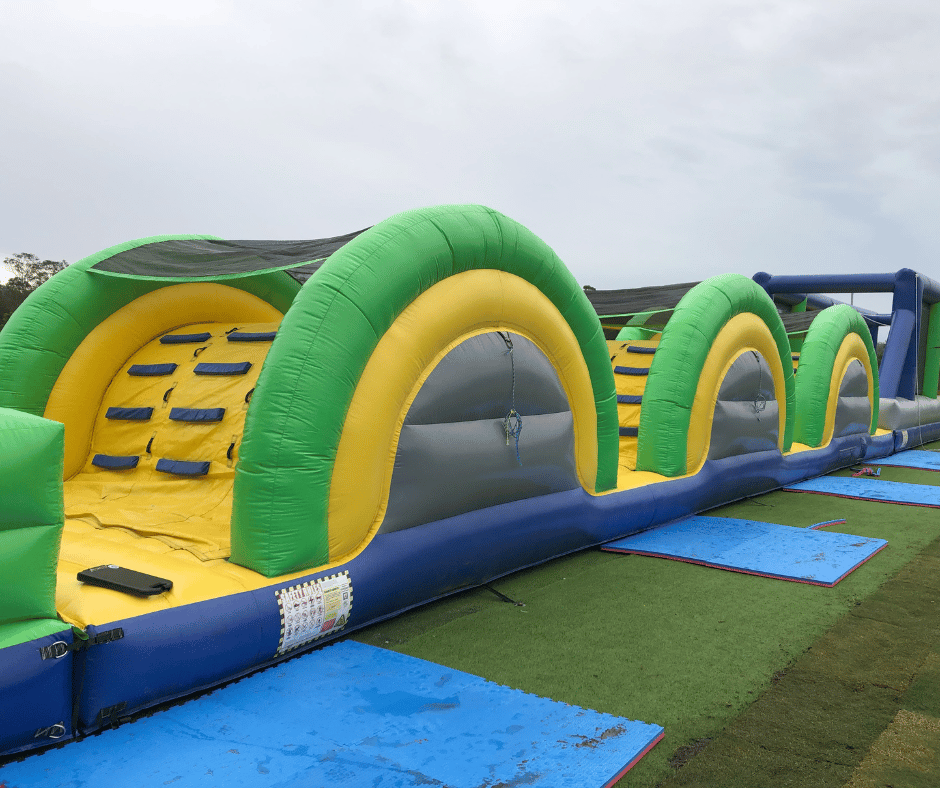
Land-Borne Inflatables
(AS 3533.4.1)
For large slides and obstacle courses, structural integrity, entrapment and wind management are the primary safety pillars.
- Mandatory Registration: Designs must be verified by a competent person and registered with your state WHS regulator.
- Anchorage Systems: Must withstand significant lateral force (1600N per anchor point) and vertical extraction force (up to 3000N per anchor point) and be inspected daily.
- Wind Limits: Inflatable devices must be evacuated and deflated if wind gusts exceed 40 km/h or the manufacturer’s specific limit.
- Entrapment: Completely bound openings and small spaces, openings that narrow and ropes/cords can present life threatening hazards, especially to small patrons. The design must not permit entrapment spaces to exist.
- Containment: Patrons are expected to bounce, and containment walls and roofs are necessary to prevent them exiting the inflatable unsafely.
- Impact Protection: Impact attenuation materials must be installed in potential fall zones and as protection from hard surfaces.
Water-Borne Inflatables
(AS 3533.4.5)
Inflatables used on controlled water (swimming pools or lagoons) require a different approach due to the increased risks of drowning and entrapment.
- The 3m Rule Still Applies: If the platform height (measured from the water surface to the highest point meant to support a person) is 3m or more, it requires Design and Plant Registration.
- Entrapment Zones: Inspections focus heavily on preventing “trap points” between the inflatable and the pool edge or under the device.
- Supervision: AS 3533.4.5 requires a dedicated ratio of lifeguards to users, separate from standard pool supervision.
- Anchorage in Water: Specialised underwater anchor points or tensioned pool-edge ropes must be inspected for wear, anchor capacity and padding integrity – daily.
Annual & Major Inspections
Compliance doesn’t end at registration. Large inflatables require ongoing verification to remain safe.
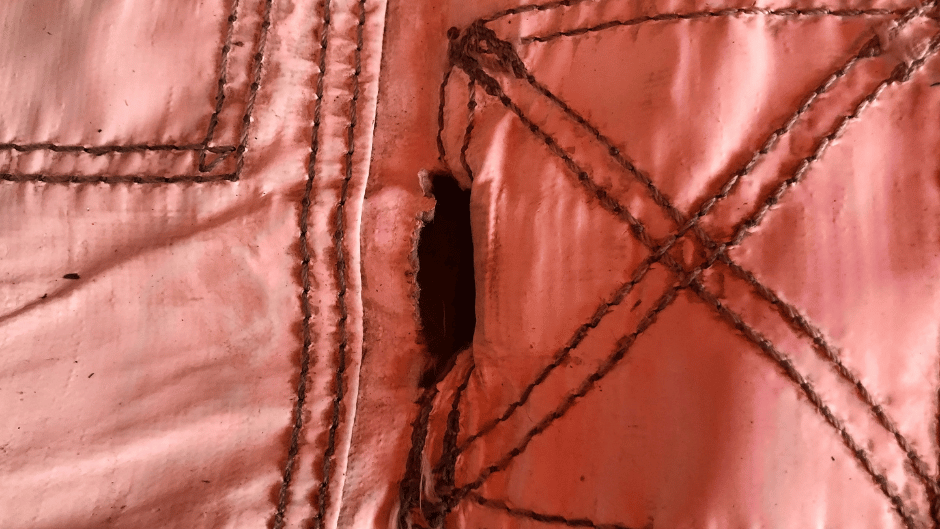
- Annual Inspection: A comprehensive check by a competent person is required every 12 months. This includes testing for fabric degradation, seam integrity, blower performance, wind stability and evacuation capability.
- Major Inspection: Every 10 years (or sooner as instructed/recommended by the manufacturer), a “Major Inspection” is required. This involves a deep-dive assessment of critical components to ensure the device has not reached the end of its safe design life.
Critical Site Safety Requirements
To maintain compliance during operation, the following must be strictly managed:
- Anchorage Systems: Devices must be secured as per the manufacturer’s instructions or those of a competent person (this may result in extra anchorage). This often requires specific ground stakes (600x 20mm) or significantly weighted ballast to provide sufficient lateral and extraction resistive force per anchor point.
- Wind Speed Monitoring: Inflatables must be evacuated and deflated if wind gusts exceed the manufacturer’s limit or 40 km/h—whichever is lower.
- Impact Attenuation: Suitable impact-absorbing mats must be placed at all exits and entrances. Potential for patron impact with hard objects must be shielded; e.g. blowers, ground anchors, power distribution boxes.
- Device Integrity: Seams, material condition, inflation regularity, hand holds & climbing features must be clean, in good serviceable condition. Entrapment points must not be allowed to form.
The Importance of Logbooks
Every registrable device must have a dedicated logbook. This is a legal record that must always be available for inspection.
It should contain:
- Design and Plant Registration numbers.
- Site establishment and installation details and check records
- Records of daily pre-operational checks.
- Maintenance, repair, modification and inspection history.
- Incidents and compliance notices
- Operator training records.
- Previous inspection certificates.
Daily & Logbook Maintenance
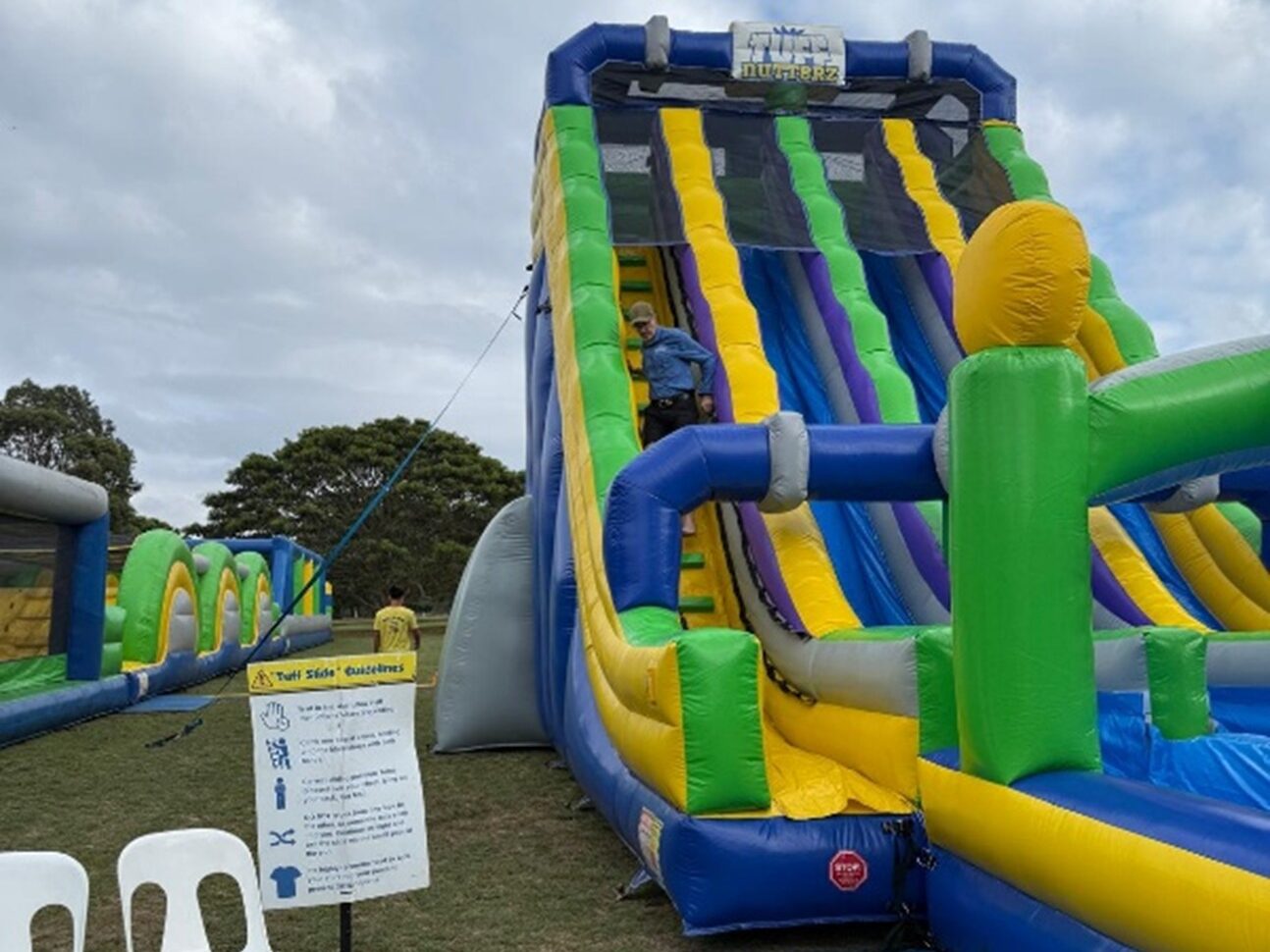
As part of the “engineering inspection” the compliance standard requires that Pre-start Checks are completed daily by trained operators/technicians.
The Logbooks are required to have meticulous record-keeping of every cycle, fault, and repair. Our engineers will review these logbooks during the Annual Inspection to look for performance trends that may indicate progressive safety or critical system reliability faults could be imminent.
How Aidaptive Can Help?
Navigating AS 3533.4.1 and state WHS regulations can be daunting. Aidaptive provides expert consultancy for:
- Design Review Coordination: Our engineers work with to get your designs verified for registration.
- Audit Readiness: We review your logbooks and safety manuals for gaps.
- Compliance Audits: We ensure your site setup, documentation and operation records meet current standards.
- Risk Management: Developing device-specific emergency plans and safety protocols.
Stay Safe
Stay Compliant
Stay in Business